Warm regards
The particularSmartwatch’s Heart Rhythm functionality has innovated how diverse users observe their heart health. This introduction examines into the methodology of the ECG software on the Apple Watch, outlining how it works and what form of facts it can provide. We’ll examine the fundamentals of electrocardiograms, conceivable drawbacks, and necessary considerations to hold in mind before trusting the results. Ultimately, this document aims to facilitate you to grasp your heart’s rhythm with the guidance of your Electronic accessory
Appreciating ECG+ inside Your Device
Everyone's Smartwatch grants a remarkable option, the ECG+ utility, enabling you to capture an electrocardiogram exactly from your wrist. This tool isn't a equivalent for regular medical tests, but it provides valuable information about your heart cadence. The ECG+ app recognizes atrial fibrillation (AFib), a condition of irregular heartbeat, and can display other heart deviations. To utilize it, ensure your watch and iPhone are enabled. You’ll be required watchOS 7.5 or latest and iOS 14 or later on your iPhone. The process includes placing your fingers on the Digital Crown and an additional area below it, delaying the watch perform the reading. Results are stored in the Health app and can be provided with your clinician.
- Authenticate proper watch positioning.
- Follow on-screen instructions.
- Consult with results with a clinical professional.
Apple Watch Cardiac Monitor: How It Works
Our Wrist gadget’s ECG component utilizes an ingenious approach to monitor your coronary electrical patterns. It runs by applying electrical nodes located within the rotary dial and the loop. When you initiate an ECG examination, these devices send little electrical waves through your appendage, which in turn record the electrical images of your cardiovascular waves. These entries are reviewed by cutting-edge protocols within the instrument to compile an ECG output, which can then be observed within the healthcare software on your portable gadget. In terms of accuracy, while the Apple Watch ECG detector can give valuable information, it is never a replacement for a professional ECG run by a certified specialist. Research have shown varying levels of similarity with medical-grade ECGs, highlighting the value for evaluation by a doctor and it is obligated to be used as a resource for surveillance purposes, not for precise validation of vascular conditions.
Breaking Down the this smartwatch ECG Analyzer
The specific wearable’s ECG application can seem perplexing, but appreciating how it works is interestingly simple. It’s necessary to understand that this application isn't built to substitute a certified professional’s evaluation; instead, it supplies a reading of your cardiopulmonary electrical function. To put it briefly, the watch utilizes electrodes built into the crown and interface to measure the circulatory signals. What it does can highlight potential anomalies like atrial tremors, which necessitates intensive medical inspection.
- It's a primary instrument.
- Always connect with a qualified.
- Acknowledge the restrictions.
Cardiac Screening on Apple Watch: Interpreting Your Cardiopulmonary Readings
Your Apple Watch's ECG option offers a outstanding glimpse into your pulse's signal. However, it's critical to note that these readings aren't a equivalent for a trained diagnosis. An ECG may detect abnormalities like atrial fibrillation (AFib), which is a pattern where your cardiac beats sporadically. Separate findings could include a stable pulse, or infrequent patterns that support additional investigation by a expert consultant. Never forget to share your ECG recordings with your medical professional for valid assessment and adapted advice.
Can Your Digital Watch Pulse Analysis Giving Exact Results?
The growing Apple Watch ECG feature provides a tempting glimpse into your cardiovascular health, but a matter lingers: has it truly producing accurate readings? While the Apple Watch ECG is authorized by the FDA, it's vital to realize it's not a backup for a professional therapeutic evaluation. It’s designed to recognize potential electrical irregularities, which can be ECG Analyzer a need for further investigation, but false alarms and false misses are realistic. Several variables, including proper alignment of the watch and dermis contact, contribute in securing reliable results. Reflect on consulting with your medical professional regarding your ECG results and never make conclusions alone from the Apple Watch's review.
- Guarantee proper watch setting.
- Talk about results with your care group.
- Never self-treating based on ECG data.
Apple Watch ECG & ECG+: Traits and Perks Assessed
This Apple Watch offers certain modern ECG and ECG+ utility, offering users to collect one electrocardiogram immediately from their wrist. The foundational ECG utility can locate signs of pulse abnormalities, one potentially concerning heart condition. ECG+ broadens upon this, presenting a prolonged 30-second recording timeframe and expanded analysis concentrated on spotting left-side atrial parts, and that are relevant for exclusive patients with such record of cryptogenic hemorrhagic episode. These facilities symbolize a considerable development in portable biological observation systems, hypothetically facilitating for earlier management and optimized recipient consequences.
Troubleshooting Standard Issues with her Apple Watch ECG
If that Apple Watch ECG software isn't running as expected, multiple possible sources exist and have the possibility of being fairly corrected. Initially, make sure that watch and your iPhone are upgraded with the latest software. In the next step, test turning off and on both gadgets; a minimal reboot often eliminates light glitches. Additionally, audit the ECG options in the Health platform to validate everything mandatory parameters persist established accurately. To conclude, if you're still undergoing challenges, contact Apple Customer Service for extended assistance.
Outside the Principles: Refined Apple Watch ECG Evaluation
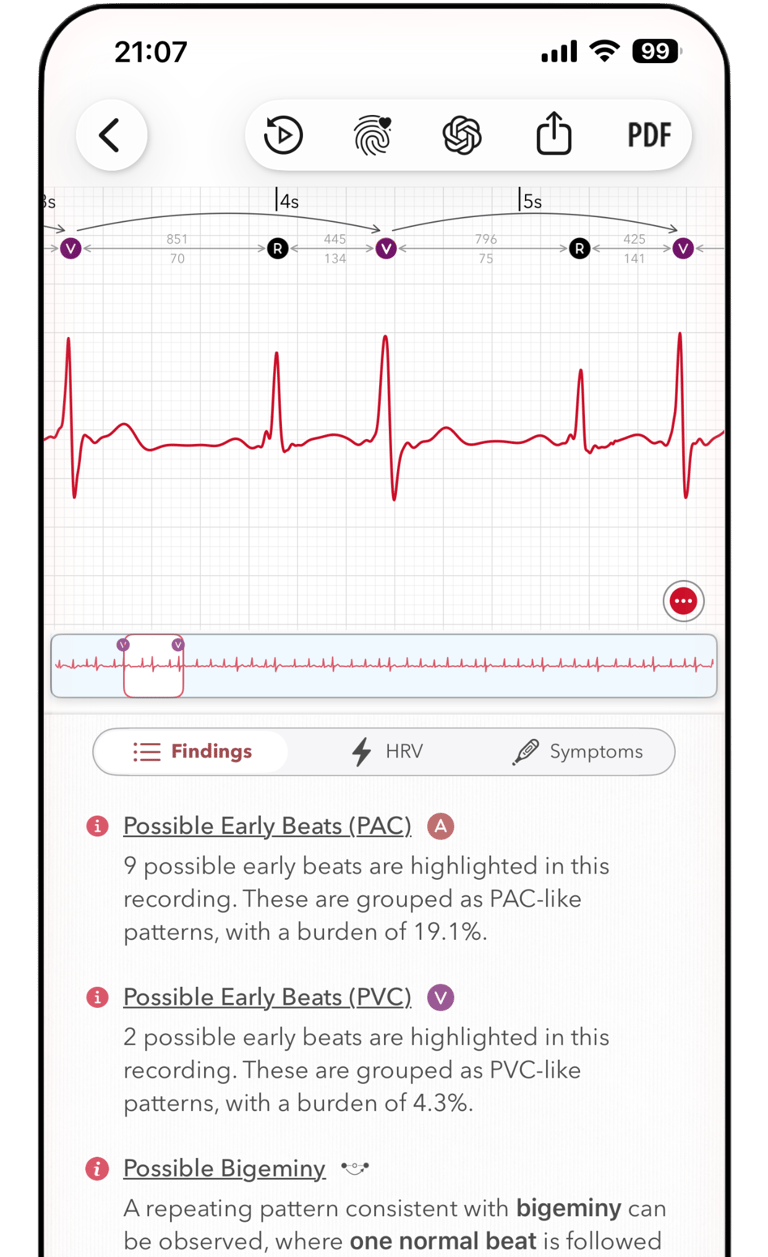
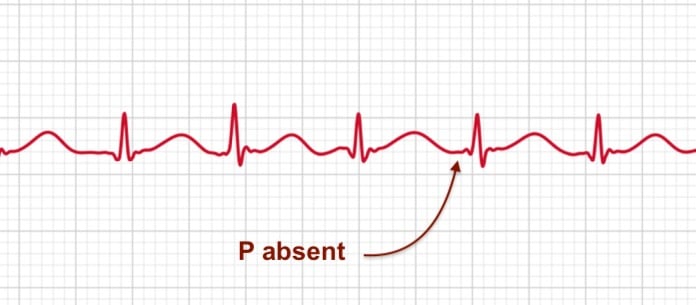
While the Apple Watch’s ECG asset offers a impressive tool for detecting potential atrial fibrillation, understanding exceeding the primary assessment reveals a realm of intricate choices. Deliberate observation of the entire waveform, including details like P wave configuration, PR length, and QRS pattern, requires a extensive familiarity of cardiac physiology. Furthermore, evaluating trends over intervals and associating ECG records with participant’s conditions can provide crucial insights for additional clinical review, even though it's necessary to consider that the Apple Watch ECG is is not meant to be a backup for a certified cardiac diagnosis.
Farewell